Why fulvic acid is fundamental to health

If you’ve ever had a garden, you know your success depends a lot more on your soil than on your seed packet. Yes, if the seeds are bad, they won’t grow. But even with good strong seeds, if your soil has the consistency of rock or beach sand you won’t get anything from them. You need rich soil with plenty of nutrients for a beautiful garden.

The same concept can be applied to the human body.

Poor nutrition, chemical exposure, stress, and other factors weaken an individual’s internal ecosystem, changing how the microbes that are naturally present in the body function. Food isn’t digested and nutrients aren’t able to nourish the body. Disease is the result.

Ayurvedic medicine has traditionally used Shilajit, a resin-like substance found in rocks in the Himalayas, for building and maintaining athletic performance and mental acuity. It is an adaptogen especially helpful for chronic conditions, increasing the body’s resistance to various diseases. These benefits are attributed to high fulvic and humic acid content. But its rock source is often contaminated with heavy metals, and doesn’t absorb well. Dosing is often inconsistent based on different sources: every rock is a little bit different.

So how do we tap into the benefits without the risks?

Fulvic Acid is also found in plants such as radishes and seaweeds grown in sediments or sediment rich waters. It is anti-inflammatory as well as supportive of memory and the immune response. It is a powerful shield against the aging process.

Humic acid is a complex molecule formed from the breakdown of plant and animal matter. It is the work of micro-organisms and part of the magic behind compost in the garden. Humic acid governs the nutrient and mineral absorption process in plants, animals, and even humans. It aids in detoxification, balances the body’s pH levels and facilitates the transportation of essential nutrients into cells. 

The blend of both of them combines the best of ancient Shilajit without the risks of heavy metals or inconsistent composition.

Why is this important?

Minerals and water are required for carrying nutrients as well as the transmission of nerve impulses that drive healing. If you are utilizing any sort of frequency medicine such as magnets, sound therapy, homeopathy or phototherapy, proper hydration is essential to carry those frequencies to every cell of the body and speed healing on a deep level.

Fulvic and humic acid act as soil conditioners to amend the terrain of your body so that it is conducive to health and resistant to disease. Together with pure water and organic foods, your body will begin to shine with vibrant health. The biggest difference between our generation and our grandparents’ is the quality of food. When most people grew much of their own food, fulvic and humic acids were in and on the produce. Now that commercial farming is the norm, they are not in most of the foods where they should be. We need to add it in. And remember, supplements are just that – something that comes alongside an otherwise healthy diet to promote vibrant health.

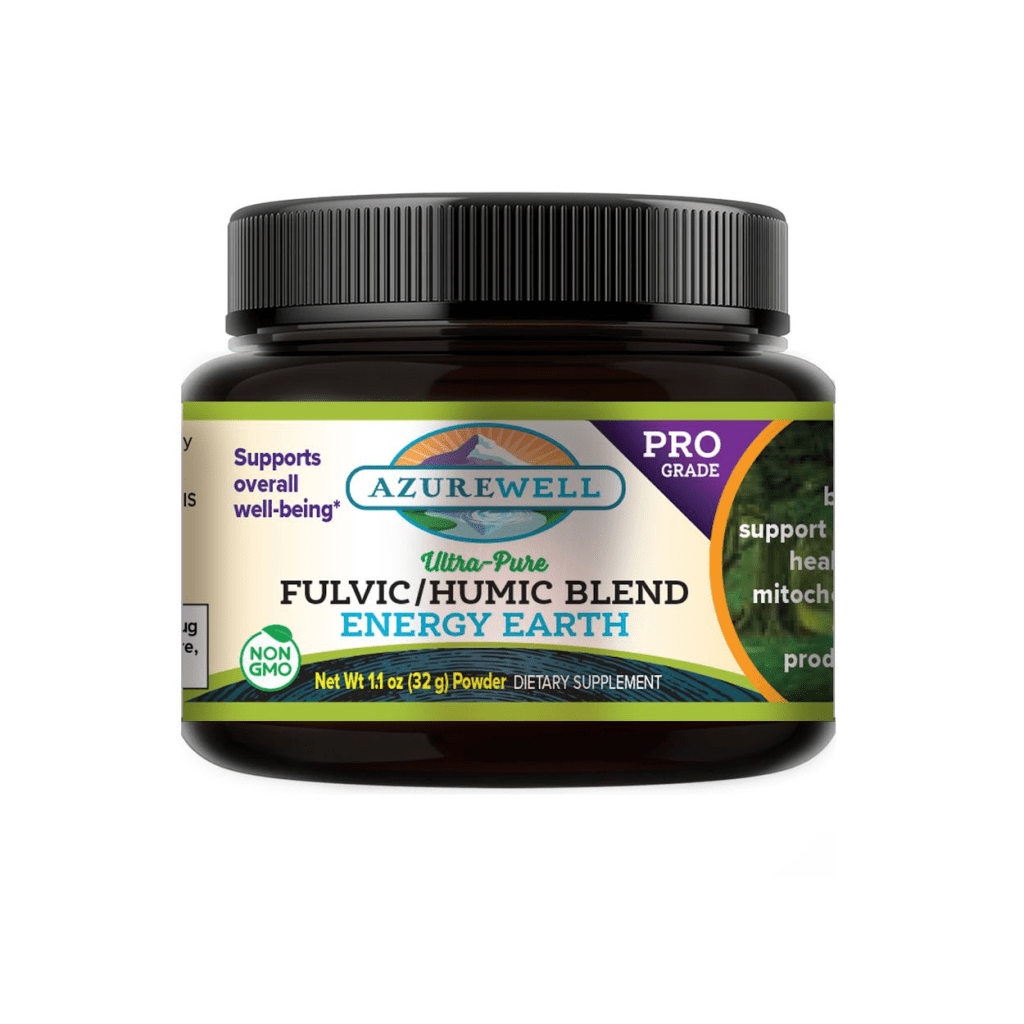
I recommend AzureWell supplements in my practice, as they align with my standards for safety and effectiveness at a reasonable price. Click on the picture to purchase – and use the promo code BEND10 for 10% off your first TWO purchases!
If you would like more information, or to connect with me for your health needs, go to https://www.brendaelvingnd.com/
Supplements: what’s the big deal?

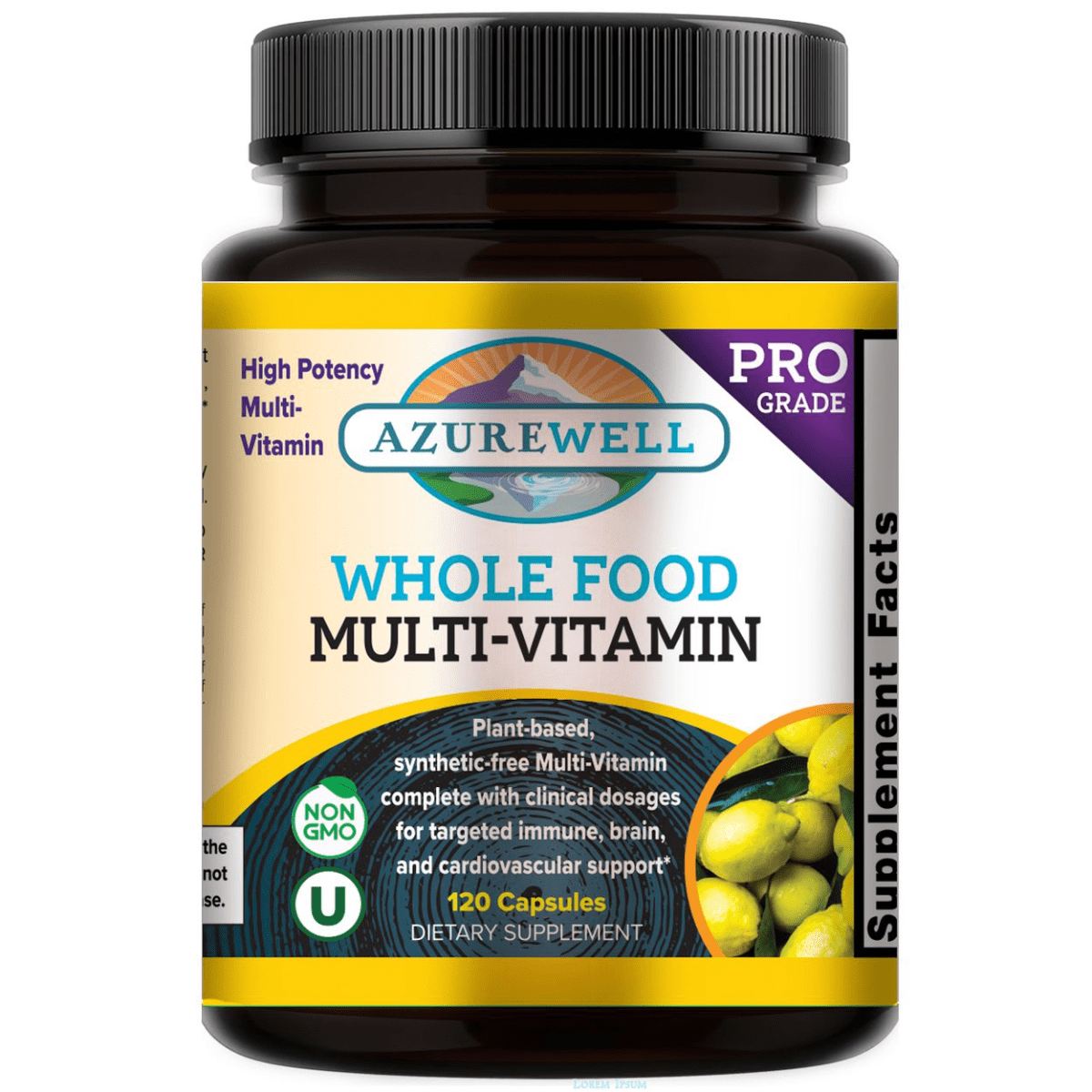
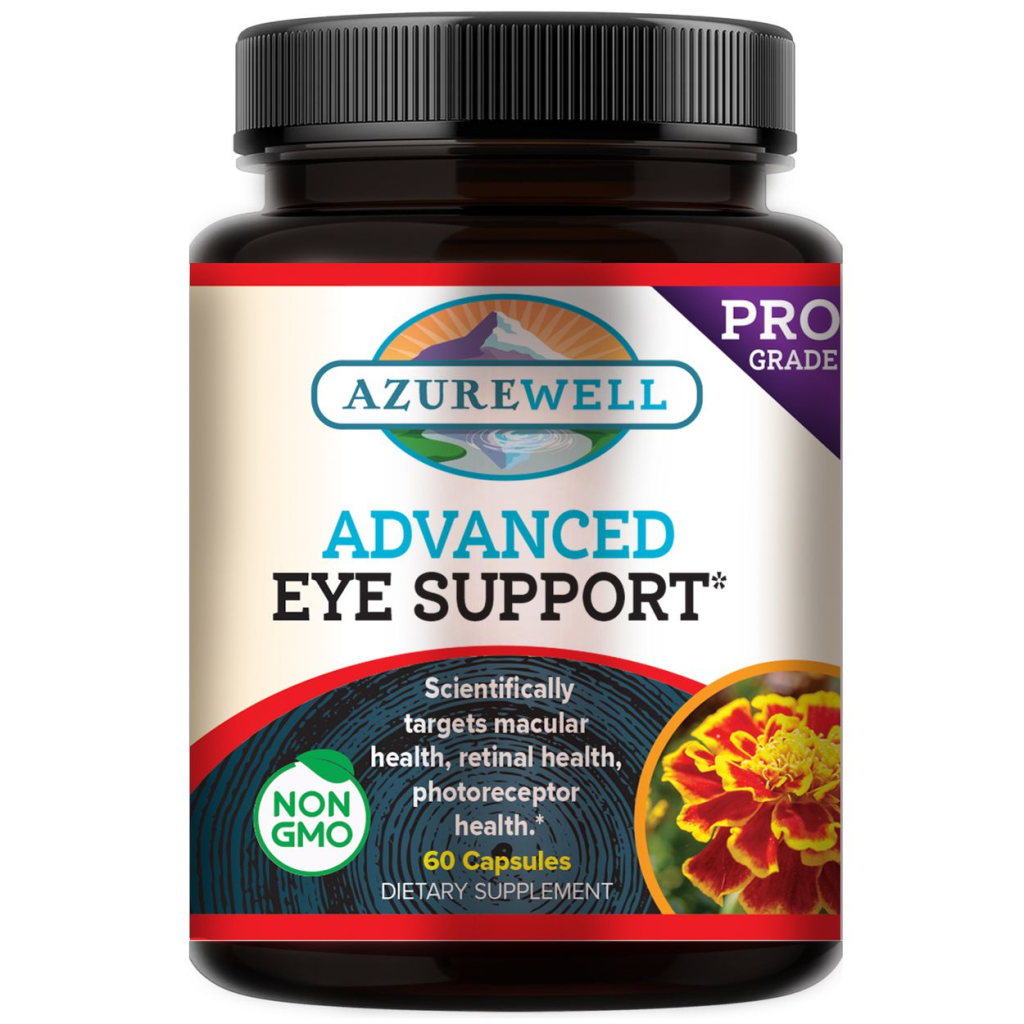
If you’re looking for supplements, it’s crucial to choose ones made from whole foods without harmful additives. I recommend AzureWell’s products for their purity and real food ingredients. They undergo thorough testing, adhere to FDA regulations, and are free from harmful substances. You can use the code BEND10 for 10% off your first two orders.

A big part of my practice is nutrition, which includes supplements. Do you need supplements? Which ones? How do you know what’s right for your body, and what makes one supplement superior to another?

The best supplements are made from whole foods, compressed in such a way as to preserve the nutrition held in the plant without taking out anything that makes it nutritious. This isn’t as easy as it sounds. Often, the most expedient method to turn a plant into a supplement involves harsh chemicals, toxic solvents, and questionable stabilizers.

I cannot, in good conscience, recommend anything that doesn’t work or that I must detoxify back out. If it cannot be absorbed by the body or causes an imbalance of something else, it’s useless for my purposes. I want to provide your body with what it needs so that it can heal and thrive as soon as possible. I’m also acutely aware that what you cannot afford you’ll never take.

I use a lot of different products for targeted results. But I also like to have something that I can recommend for general wellness. These are products that become part of my personal daily routine. Late last year, I found a new product line that fit that bill beautifully. Meet AzureWell. They have products that nourish the body with real foods, devoid of harmful excipients.

But what excited about this brand was what’s not in it. Because I work with homeopathy, I must be aware of anything that might put an obstacle in the way of your healing. Obstacles include drugs, certain essential oils, and additives or excipients.

Excipients are substances, other ingredients, in products that some suppliers or manufacturers use to serve various purposes, such as stabilizing formulations, aiding absorption, or enhancing appearance and taste. Excipients are often overlooked and can significantly impact a product’s function, its absorption rate, and its overall effectiveness. Often times, questionable excipients are used to cut costs and expedite production. They can also cause static in the lines of communication in your body, which confounds energy transfer and proper healing. This is very important to acupuncturists and homeopaths.

AzureWell’s commitment to purity ranges across all their products, including skincare essentials, botanicals, and wellness items. AzureWell’s supplements undergo comprehensive testing, ensuring botanical identities and the absence of herbicides, pesticides, and other contaminants. They strictly adhere to FDA regulations and rigorously test for potential contaminants, such as heavy metals and residual solvents. They also steer clear of GMOs, radiation sterilization, and additives like magnesium stearate.

I am deeply committed to your health and well-being. When you choose AzureWell, you’re investing in your health and well-being. But another perk to this professional grade line of supplements is that it comes from Azure Standard, which means that you can one-stop-shop for all your organic foods and products.

If you’d like to see the difference the right product can make, use the Promo Code BEND10 to receive an extra 10% off your first TWO orders. That tells them I sent you!

This is my current favorite!

Do I need supplements? Vitamin B12

My daughter woke up one morning more exhausted than when she went to bed. She had no motivation, no light in her eyes, no color in her skin. She looked anemic, but I couldn’t figure why. She eats a varied diet and takes a green supplement daily. I couldn’t find anything wrong. I took her to my mentor. The best thing about having an experienced doctor/mentor is that the problem gets fixed and I get to learn. That’s an efficient appointment.

She was low on Vitamin B-12. A major component of many energy drinks, B-12 promotes energy production. Although often thought of as a nutrient that only vegetarians need to be concerned with, more doctors are finding deficiencies in people who eat meat. What’s up?

Absorption is key

 I soon found out that the iron my daughter in my daughter’s dinner steak was not being absorbed. Vitamin B-12 works together with folic acid to make red blood cells, which carry iron. If one or the other is lacking, there either aren’t enough blood cells to carry iron, or they develop in poor shapes which cannot carry the large iron molecule. Oxygen binds to the iron and is carried to all the cells. Without iron, oxygen can’t be carried; without oxygen, nothing in the body works. 

It seems simple enough. But why would an otherwise healthy 20 year old, who eats very well and takes her vitamins be anemic? Oatmeal for breakfast, lots of green tea, fruits and vegetables. Some meat at dinner with more veggies. She tends to run alkaline, which is supposed to be good for the body. 

Except that B-12 requires acid to separate it from the protein in which it comes. If stomach acid is insufficient, it may not be separated out during digestion. This can be an issue for the elderly, especially, who tend to have low amounts of hydrochloric acid in their digestive systems. People over 60 are most at risk for developing a B-12 deficiency. My daughter was outside the curve of normal, but had a mild case of megaloblastic anemia. Her symptoms of debilitating fatigue were just the beginning. It could’ve been worse. 

The neurologic symptoms of vitamin B12 deficiency include numbness and tingling of the hands and, more commonly, the feet; difficulty walking; memory loss; disorientation; and dementia with or without mood changes…. Tongue soreness, appetite loss, and constipation have also been associated with vitamin B12 deficiency. The origins of these symptoms are unclear, but they may be related to the stomach inflammation underlying some cases of vitamin B12 deficiency and to the progressive destruction of the lining of the stomach.  – Linus Pauling Institute

So, do I need this?

Vitamin B-12 deficiency is becoming more common. Studies of autoimmune diseases such as Hashimoto’s thyroiditis, are showing that many of them are related to a B-12 deficiency.  Vitamin B-12 is water soluble, which usually means the nutrient is carried out of the body just as fast as you can take it in. But in this case, the liver has the ability to store B-12 as needed, so you can reverse a deficiency quickly as your stores come up. The Linus Pauling Institute states that vitamin B-12 is not toxic, as it does not build up in the tissues.

The good news for my daughter was that, once I found what she needed, she was back up to normal by the next day. She doesn’t have to remember to take the supplement every day, because now that she’s aware of how her diet impacts how she feels, she is more intentional about what she eats.  And being intentional about what we eat is really how any of us stay healthy.

I proudly use and recommend AzureWell supplements for a whole-food, professional grade adjunct to your personal wellness plan. Type in BEND10 for 10% off your first TWO orders!

“One cannot think well, love well, sleep well, if one has not dined well.”

Virginia Woolf

A Wholistic Approach to Nutrition

(originally published by The Gaeta Institute for Michael Gaeta on December 8, 2022. These are his words.)

Naturopathy, chiropractic, Chinese medicine, Native American healing, Ayurvedic medicine – nearly all ancient or traditional medical systems are based on the principle of wholism. But what is wholism as it applies to nutrition? This is an important question for your practice.

Many years ago, I was practicing nutrition and bodywork therapy and acupuncture and Chinese herbal medicine and at the same time using nutraceutical-type supplements. But the herbs that had worked so well when I was in school weren’t helping in practice. I increased the dosages, re-evaluated, chose new formulas, and did all these things to try to recreate the herbal results that I saw in the school clinic, and nothing worked. It was really frustrating. I eventually discovered a difference between these synthetic, isolated, high-dose chemical supplements and what was available in terms of using whole food supplements. That was an awakening. I knew that giving patients chemicals at the same time as I was recommending a good diet and using plant medicines somehow wasn’t congruent. It didn’t line up. But at the time, I didn’t know there was any other option. As I began using food supplements in my practice, together with the Chinese herbal medicine, there was a dramatic improvement in the results I saw with patients. And another interesting thing: the complaints stopped. Those calls of “I have headaches, my stomach hurts and I have indigestion after I take them and I’m constipated, and..” All the side effects from taking chemical supplements mostly evaporated. Using whole food supplements was the consistent approach to nutrition I was looking for, which actually gave the results I expected.

There must be a shift in our understanding of health. The real questions of health are not questions of reductionism, which is how most clinical nutrition is practiced. The body is seen as a machine with replaceable parts that can be manipulated in various ways. It is essentially a container full of chemicals similar to a beaker in the chemistry lab. You have a particular chemical which is changed by the addition of another chemical. If you add one thing it fizzes, add something else and it turns blue. Add a different chemical and something else will happen. That’s the basic approach to nutrition today. The goal is to identify the disease and combat it. Undesired symptoms are suppressed with chemicals.

But healing is not a matter of chemistry, because a human being is not a lab beaker. Reductionism isolates what’s wrong, and then attacks that wrong thing. The opposite of this reductionist approach is wholism. Wholism supports what’s right. The wholistic approach to nutrition, the wholistic approach to health care in general, is not to diagnose and treat but to promote health, vitality and resiliency in the person. So we’re increasing what brings life. Wholism sees the body as a garden. The garden needs sunlight and fresh air and good nutrition to grow and to thrive. Wholistic nutrition augments that power that is already designed into the body because life is what heals.

The truly wholistic approach recognizes that the whole is greater than the sum of its parts. Just as the human body is not mechanistic, a food is more than its individual chemicals or components. We cannot improve on what life, or nature, creates. Nutritional integrity is applying the whole food or plant to the whole body, nature first and drugs last. As we approach nutrition and the body in this wholistic, integrated manner, the life and healing inherent in the body will manifest.

For more information about The Gaeta Institute and its programs, click the link below.

How Can I Boost Metabolism?

I know most people asking this question are hitting the end of their willpower for their weight loss goals and just want to see some progress. How can they turn up the heat on this fat so it will go away? I hear the frustration loud and clear. We all want to drink another cup of coffee and watch our waistlines melt. It’s just not that simple.

Metabolism is, fundamentally, the rate at which you convert food into energy.

This does not mean calories in = calories out. Far from it. A calorie burned in the lab is a unit used for measurement; a calorie in your food is information that your body uses based on its needs. That calorie could fuel your labors, heal an injury, carry out a larger load of trash, or even build some new muscle. The goal is to achieve efficiency in bodily function, to make sure that every bit of fuel is used productively.

It would seem, especially with all the talk about keto dieting, that excess fat would translate into excess energy. It makes sense that finding the burn switch would be the simplest way to use all that storage. But not everything we take in, or store, is useful.

Author’s photo

I live in the country, where garbage is reduced, reused or burned. If I’ve been inefficient with the first two R’s, my burning will be, to a certain extent, useless. There’s too much in my pile that won’t burn. It’s obvious to the neighbors that I didn’t grow up here because I still have so much to learn. My burn bin is full of charred cans and bottles. They will have to be taken away because they are not fuel for fire. Interestingly, the litter from my daughter’s rodent cage should be pure flammability: just dirty wood shavings and shredded cotton. But it is damp, and packed tightly into a bag for disposal. It remains after burning because the fire can’t stay lit long enough to actually use it. There’s too much junk.

Likewise, much of what is sold as food in our stores is either not actual food, or is difficult to use because of how it’s been treated. Many so-called foods have been devised in a laboratory or processed into oblivion, and there is no energy present to convert. In order for food to be truly considered food, it must have some life within it. Truly life-giving foods are never stagnant. They will not wait on a shelf until needed.

If we want our bodies to work well, we must provide fuel with actual life in it. Vital foods provide energy and building blocks for new cells, so more gets accomplished. If too much non-fuel comes on board, less gets done as more work is required to sort food from trash. Junk will not burn. Quality foods strengthen the body to sort what is not useful out and sweep it to the curb.

What’s the bottom line?

-Be intentional about what you do. Eat quality foods and devote time to sleep. But don’t do a major overhaul overnight. Your body needs to prepare for a different style of working. A proper approach to achieving efficiency in the body is to recognize that your body is unique. There is no ideal diet that works for everyone. You must start where you are, and begin to make good choices based on your needs, tastes and abilities. If you don’t like meat, don’t think you have to eat it. Give your body some security, so it knows that it will have what it needs when it needs it. Pushing yourself too hard to do something unfamiliar triggers hormones that effectively stop digestion and fat burning. Give the body what it needs, and it will begin to handle things properly. Know that it will take time – no truly good thing happens overnight. You are building a new body.

-Choose fresh foods over frozen ones, and frozen over canned. Fresh foods have enzymes that assist the body with assimilation. The more of these you can get, the healthier you’ll be. Cook vegetables gently, to where the color is bright. If a vegetable looks dull, it’s lost a lot of the valuable nutrition that your body could put to use righting wrongs. Canned food is ok, but it’s designed for storage, not ideal health. If you’re trying to declutter, more storage foods aren’t the solution. The same goes for boxed “foods.”

-Sleep well. The fastest way to create havoc in the digestive process is messing with the sleep cycle. But the reverse is also true: poor digestion often disturbs sleep. Sleep is when your body does repair work and takes trash to the curb. Just like in the kitchen, when your body runs short on time, trash is pushed aside until there are more resources to deal with it. Give your body time to do maintenance and take out the trash. Stop eating 3 hours before bedtime and don’t rush for breakfast in the morning so your body has uninterrupted time to do its work. Aim for 12 – 16 hours between dinner and breakfast so that your body can rest and restore its systems. If you do shift work, take time to nurture yourself on your days off.

-Fats are necessary to burn fat. Don’t buy into the line that all fat is bad. Margarine is cheap for a reason. Real foods contain real life, and they will break down and expire. If it won’t go bad, know that it will become part of that unburned pile of garbage over your hips. If you don’t like fish oil or butter, don’t eat it. But opt for coconut oil over shortening, and olive oil over generic vegetable oils. Vegetable and corn oils are added to cattle feeds to fatten them. Don’t think they won’t do the same to you.

Metabolism is more than burning fat faster. It’s about the efficient use of whole foods to build wellness. As fewer non-fuels are consumed, the body is enabled to begin taking care of useless debris that has collected.

Fasting, whole foods and being a work in progress

I came down sick over the weekend. It was fairly obviously something I’d eaten, but that wasn’t so easy to track down. Two lovely ladies, out of the goodness of their hearts, had offered to cook for me, giving me two days off of meal responsibilities. What a blessing!! Everything was delicious, but my stomach was not happy and I wasn’t willing to insult it further. So I took advantage of almost my entire family having other places to be and extended that vacation two more days. I got better. I pondered the nature of disease and recovery, and noted that I had no sign of bacteria or virus, and no medications were involved in healing. As is so often the case, it was all food that made the difference.

Fasting has become a hot topic as the global obesity rates continue to rise and impact chronic disease rates. The assumption is that, if people are overweight, then they must be eating too much. Complete fasting, or at least limiting food intake to a shorter window of time each day, is seen as the long-lost key to perfect health. I wish it were that simple. If there were a magic bullet of health, a fountain of youth we just had to drink from, this wouldn’t be a worldwide issue.

According to Dr. Jason Fung, the de facto expert on fasting, many chronic diseases can be reversed by stopping eating. Giving our body a chance to process what we’ve taken in each day allows us to better utilize the next day’s portions. Cycling food and rest, which promotes assimilation, is the biggest secret to health. I fully agree.

But there’s a simple point I want to make. Most modern diseases are caused by nutritional deficiencies – malnutrition. Not enough good quality food. Merely cutting back what you eat without changing what you eat isn’t going to solve the problem of poor health.

Many years ago (over 100, as I see it), food was made from whole ingredients: ground grains, fresh butter and milk, grass fed meats and locally grown vegetables. Processing was initially instituted to remove molds on grains, which made for a safer product. As processing improved and became more widespread, glaring deficiency diseases appeared. The government decided to replace the lost nutrients in flour, and Vitamins B1, B2, B3, and B9, along with iron and sometimes calcium, were added back in. But let’s look at what really happened. A grain of wheat, when refined, has the outer 2/3 removed. This includes all the fiber and B vitamins, about 17 nutrients in all. All that’s left is the starch and most (not all) of the original protein. Then the denuded grain is “enriched” with five, maybe six, synthetic replicas of what was taken out. That’s hardly what most people think enrichment means. And, as nutrition expert Sally Fallon explains, digesting enriched flour requires more B vitamins from your body than it gave you. That’s not how eating is supposed to work.

According to some estimates, refined white flour in bread, pasta and cookies makes up about 1/5 of the American diet. Think about that a second: if 20% of what I eat depletes my body of more nutrients than it gives, then ceasing to eat those foods may cut the depletion, but I’m still hungry. I’m still not getting what I need. More to the point: if a good proportion of the diet does nothing more than promote malnutrition, then cutting back isn’t solving the problem. There’s still not enough nutrition to produce health.

Fasting, in any form, is a good rest from a basically whole diet. But most of us grew up on the standard American junk food diet, which we’ve already seen doesn’t sustain us well. A better solution than trying to cut out the bad stuff (a losing proposition, in my mind) is switching to whole foods. Freshly prepared ingredients from the farmer’s market provide more nutrients and fill you up faster, for longer. You may actually eat less because non-processed food contains all the necessary fiber, vitamins and cofactors required to synthesize them. Your body is satisfied because it has what it needs and doesn’t have to waste resources on detoxifying chemistry experiments disguised as dinner.

Know that this doesn’t happen immediately. If you’ve ever had a plate of brown rice after growing up on Minute rice, you know what I’m talking about. The flavors are different. You may have to mix the two for a couple weeks to start adjusting. (My poor mother was not happy after I proudly served her whole grain everything for a weekend. It tasted good, but later – !!! Lessons learned.) We’re all works in progress, and fast food is a fact of life. Just do the best you can with the meal in front of you – add more veggies and opt for real foods over processed as much as possible. Don’t sweat the poor choices and celebrate the good ones, especially as they add up. Don’t judge your progress by a particular meal, but how the meals add up. What does your diet over the entire week look like? Are there more leafy greens and water, or french toast and soda?

Turning our diet around is the key to health. I’m not arguing that you move to Pennsylvania and buy a plow and a Morgan. Whole foods are still obtainable in your grocery store – you just have to stay out of the middle aisles. Learn to cook, if you don’t know how. Cooking videos on YouTube are a great way to learn and be inspired to try new foods.

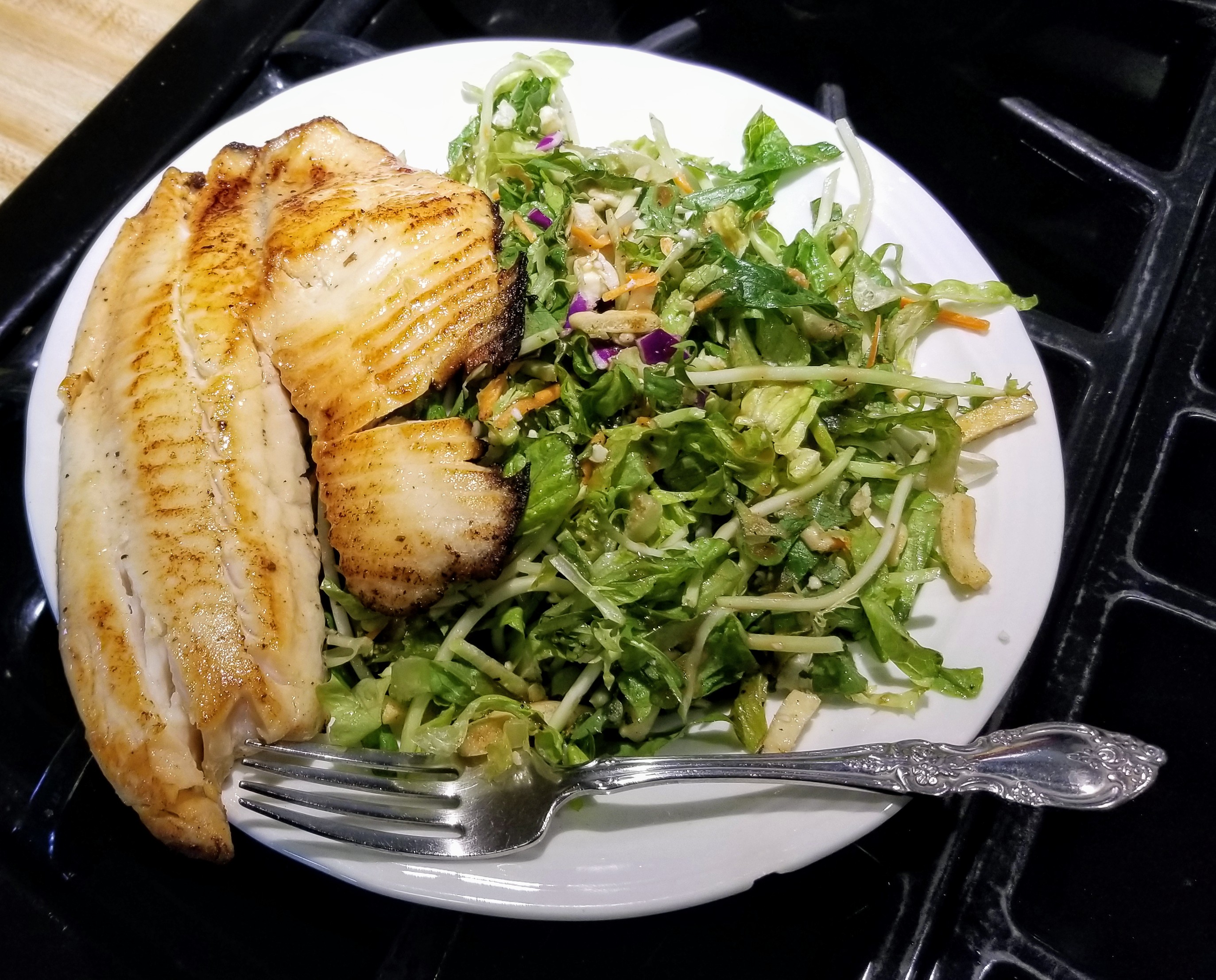
Greek salad with balsamic rubbed tilapia

Have questions about how to turn your diet around? Comment below and I’ll do my best to help you tailor your diet to your needs.

Optimizing Nutrition for Vitality and Well-being

Celeste is a beautiful young lady who is going places. She probably has too many irons in the fire, but that’s what the college years are about. The only thing that holds her back is her energy level – and, if you talk to others, she’s a bit snappy at times. She doesn’t handle stress well. I talked with her a bit, and she said she ate well, with very little soda or sugar, and took her daily multi-vitamin. She couldn’t figure out what was wrong.

The more I talked with her, I found that she had a very routine diet, nearly the same every day, heavy on pasta with few vegetables and no shortage of ice cream. I suggested she try to eat something colorful – explore new foods – several times a week. She instantly snapped, and insisted her daily vitamin was sufficient to cover anything she’d missed. She wanted help, but didn’t want to change anything.

I understand that change is hard, especially if you’re low on energy. But in some respects, the body isn’t much different from a car: if you don’t have the output you expect, you need to start running premium fuels.

Being healthy is about more than popping a Hit-What’s-Missing pill on the way to wherever. Multi-vitamins are designed to fill the needs of a statistical norm. But statistical norms are numbers, not actual persons. Your personal needs change with the seasons, with the years, and with the demands placed on you. There may be nutrients in the formulation that you don’t need, or not enough of what you do. Most multi-vitamins also contain synthetic nutrients, which your body may or may not be able to utilize the same way as their naturally occurring counterparts.

Proper nutrition is a keystone of health, and comes from fresh, colorful foods and pure water. Just like us as the seasons change, different vegetables wax and wane. Lettuce, for instance, is pitiful through the winter and irresistible in the spring. Oranges contain abundant Vitamin C and pure hydration to carry us through the cold and flu season when we don’t want a glass of water. In this way, our foods themselves encourage us to diversify what we eat. Knowing what you need is simple, too. If it doesn’t taste good or upsets your stomach, you don’t need it. If it tastes amazing, you probably do.

Of course, this doesn’t work with processed “junk” foods, which trick your system with chemically engineered tastes. Processed foods, in effect, “steal” good nutrients from your body: they displace better foods from your diet and require extra effort to process through your body.

Sugar is not among the recommended foods…. for sugar supplies nothing in nutrition but calories, and the vitamins provided by other foods are sapped by sugar to liberate these calories. (Wilder—Handbook of Nutrition)*

Simply put, the sugar we know today is a highly concentrated byproduct of the original plants from which it comes. It is closer to a drug than a food. It promises much and demands more. Devoid of any accompanying fiber or nutrients, the sheer flood of pure crystalline sugar overwhelms our metabolic processes. (The average person consumes 800 calories of sugar daily. On a 2,000 calorie/day diet, that represents 40% displacement of actual food.) B-vitamins and phosphates, necessary for the mitigation of stress and production of energy, are used up in its digestion. Sugar contributes nothing to the transaction but a short burst of energy, then nothing more. The body has no choice but to store the excess calories as fat as actual energy becomes more depleted.

In order to get the best transfer of energy, we must eat real food, defined as “material consisting essentially of protein, carbohydrate, and fat used in the body of an organism to sustain growth, repair, and vital processes and to furnish energy.” Sugar flaunts the defining characteristics of real food and hijacks the body’s natural response to it.. We are then less able to sense what is good, what is not, and when we’ve had enough. Real food provides everything we need for productive living and doesn’t require more than it gives. Real food doesn’t wear an ingredient label. Real food obviously goes bad after a few days.

The body requires glucose for life, but there is no evidence that dietary sugar is necessary. Most diets attribute their successes to limitation of sugars, whether they are for losing weight or controlling blood pressure or other issues that define metabolic syndrome. With a proper diet of real foods (those found on the perimeter of your grocery store), your body can produce exactly what it needs for real health – along with plenty of energy to get everything done.

I can help you figure out your body’s sensitivities and needs, and begin the journey to better nutrition and health. With 25 years of sleuthing and resolving odd symptoms, I know the likely culprits as well as how to find not-so-likely causes. Contact me for a free consultation to see if I can help you!

*Moose RM. Sugar a “diluting agent”. JAMA 1944;125:738–9. 10.1001/jama.1944.02850280054021

(For further details on what I’ve written here, see https://www.ncbi.nlm.nih.gov/pmc/articles/PMC4975866/)

Achieving Real Health

Who are you? How do others see you? Do you reflect everything you were created to be?

We’re embarking on the second week of 2019. The ramifications of our resolutions are becoming clear, and making this change permanent is looking to be more difficult than we’d hoped. Resolutions, because they are effecting change, take us out of our comfort zone. But if it were easy, we would not be making progress. But what is the real goal, and what will carry us through the obstacles on our path?

The reason for any lasting change has to be solid. Just fitting into that sexy dress isn’t enough – at the moment of truth, I don’t care about that dress. I care about who I am, and how I am perceived by others. I want people to treat me with respect because of what they see. A person with presence doesn’t deal with the same petty nuisances that others do.

So who are you? How do others see you? I knew a man who stopped to look at himself and the imprint he made on his young daughter. Did he want her growing up with a picture of Dad in her head, looking for a similar foul-mouthed, beer drinking jerk for a husband? He changed overnight and never looked back.

He knew that his image was not how he wanted to be remembered. But more, he cared about who she saw herself to be, how worthy she was, and what her children would become. How often do we stop and wonder how that amazing ancestor we all have would think about us? Are we everything he dreamed we would be? Do we represent his lineage well?

Life is a gift. We did not create ourselves. All we can do is maintain what we have, and maybe do a complete restoration at some point (or points.) Many years ago, my dad gave me an old bicycle. He had picked it up at a garage sale some time back, a few years old but very neglected. He stripped it to its beautiful frame, painted it black, and applied the decals that would’ve been proper when it was new. He polished its chrome rims and fenders, and bought new whitewall tires. That bike was gorgeous, and I received lots of compliments. But it’s been hanging in my shed for a long time now. The decals are chipped, the chain and hubs are dry, and the rims no longer shine. It now shows my neglect more clearly than my dad’s handiwork.

Has putting others’ needs ahead of your own left you forgotten and rusty? It may be time for a resto. But to what? If you were stripped down to the basics of who you should be, what would you build on?

Or do you not know that your body is a temple of the Holy Spirit within you, whom you have from God? You are not your own, for you were bought with a price. So glorify God in your body.  – 1 Corinthians 6:19-20

Scripture says your body is a temple, in which God’s Spirit lives. I picture the supermodel that a company hires to be the faceplate for the brand. God chose you as His faceplate. You are the very image of God. That is buildable.

God is the author of health. If we are reflecting Him properly in the world, we should look like the intricately designed and tuned vessels they are. It’s more than just food and exercise that makes us healthy. Professional, social and spiritual pursuits also impact who we are. Everything we put into our lives should be whole, hearty and life-giving if we are to truly shine with health. Health, like beauty, is a total package, both inside and out.

The image must have integrity.

Once you recognize who you really are, who you were created to be, and how important you are, resolutions become more achievable. Stop and think, at various points in the day, if you are reflecting your design clearly. Is this what a temple of God looks like and accomplishes? Is this how a temple of God stands in the midst of trouble? Is this what a temple of God is used for? The closer you get to ‘yes’ on these questions, the closer you are to real health.

What diet is best for me? or, How to use a Food Journal

What diet is best for me? 

Which supplement should I take?

How do I know which brands are best?

These are such common questions, and very good ones to be asking.  The problem is, there’s no right-and-done answer.  People are complex organisms, and what works for one individual may not work so well for the next.  Bio-individuality explains the differences in individuals as well as the plethora of supplements on the shelves and the number of diet plans that all seem to work for somebody.

How do you find what will actually work for you?

The honest truth is that no one knows but you. 

Your body is unique, and like no one else’s. You have different parents, different eating and stress patterns, different energy levels, different chromosomes from every other person on this planet.  We are all similar, yet each of us is a one-off creation with custom requirements.

The only way to know what your body needs is to test and see what works and what doesn’t.

It’s simple, yet very scientific.  Experiment, observe, and document – the fundamentals of science are the basics of keeping a health journal.  Writing down what you observe – a journal – is key to gaining success in personal health.

Basically, you need to note what you do and how you feel each day until you get a clear picture of what foods cause fatigue or constant cravings for more, and which ones energize you.  It’s important to note the times of everything, even if it’s just morning or evening.  You will begin to see how particular foods impact you.  You can also note exercise and sleep, as foods often affect the quality of both. Moods are very important to watch.  I was in high school when I noticed that I often fought with my mom in the mornings before school, leaving me crying bitterly all the way to school. By the time I arrived at school, I was exhausted and snacking on my lunch, leaving me not enough food to get through the day.  It didn’t take long to isolate a particular breakfast cereal which caused me major mood swings – which combined with a milk sensitivity to ruin my day.  When I ceased having cereal with milk for breakfast, all that drama ceased.

It’s not difficult, and it doesn’t have to be perfect. You’re just looking for patterns.

First thing in the morning, note your baseline: how do you feel before adding food? Fill in the time and whether you’re energetic, motivated, well-rested or feel run over by a truck.  Then have breakfast and note what you had, and how you feel immediately afterward. Are you satisfied? Or are you craving sweets or something else? If there was much time between waking and eating, note the time you ate. One or two hours later, note again the time and how you’re feeling. Are you tired, or still energetic? Grouchy or content? Needing a cup of coffee or a treat?

Repeat this for everything you eat for one week, including the weekend: the time, what you ate, and how you feel, both immediately and several hours later. Put each entry on a new line to make it easier to spot similarities. Figuring out supplements will require you to treat them like a food, isolating different supplements from each other by several hours or alternate days. You will begin to see patterns after several days (maybe sooner!) of how each food or supplement impacts your energy levels and moods, both immediately and over time. Bloating and nasal stuffiness, for instance, often happen hours later or the next day.

As you begin seeing that protein for breakfast leads to a productive day, or a smoothie turns you into a snackaholic, you will learn what works and what doesn’t.  Experiment with new eating patterns.  Pretty soon, you will have a custom-made, workable diet plan that is tailored to your individual needs.

You don’t have to do this forever – just until you find what you’re looking for. The more you track, the better picture you will have. And keep in mind, as your needs change, you may want to repeat this exercise to see why old patterns are no longer working. Fine-tuning is part of staying healthy over the long term.

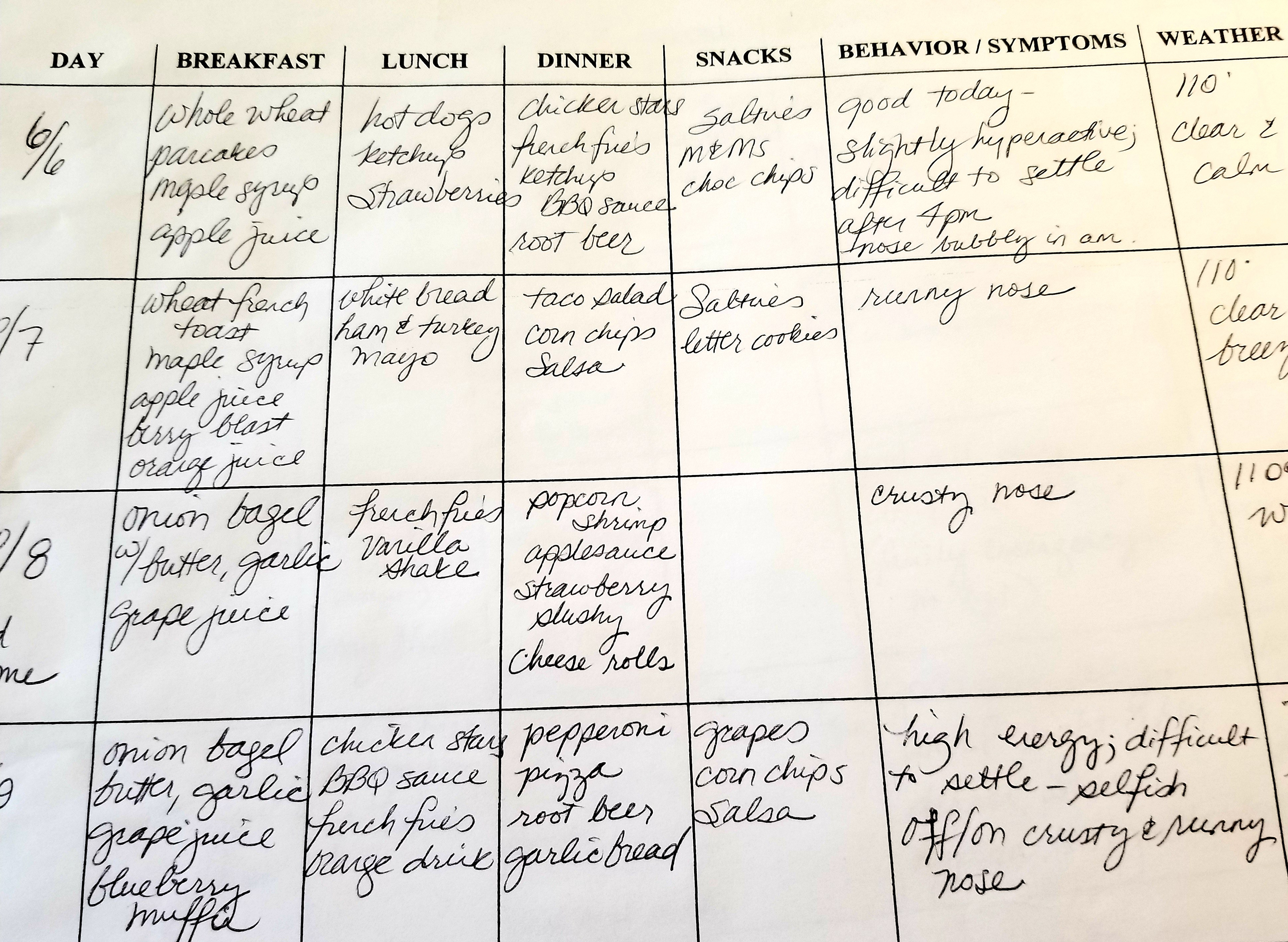
20180616_155437.jpg
The first journal I used for my son. It took years to correlate foods and moods because I didn’t note times of both. It still helped me find intolerances and develop a diet for him.

Let me know if you try this, and what you find!!


I found this post really fun inspiration for watching my health:  http://steadystrength.com/10-motivational-nutrition-quotes/


Teaching Children to Eat Well

I heard a blurb on the radio the other day about how a study had come out proving that it wasn’t worth the fight to make your children eat vegetables.  I didn’t hear the details of who published it; I was too busy collecting my jaw from the floor and listening to their rationalizations.  From what the DJ said, the psychosocial damage to both parent and child totally outweighs any benefit of the vegetable eaten, and over time, forcing the issue of food makes no statistical difference in how the grown child eats.

I think the study missed the point. If the current global health crisis is to be addressed, it must be addressed one kid at a time, one meal at a time. Our habits of eating must change. It’s a lifestyle, not a short-term diet. With that in mind, if you’re in a battle over food with your child, it’s because they’ve already learned what to eat. They eat what you eat. If you’re trying to force them to do what you don’t, they know it’s only a matter of time before you give up; they’ve won.

How should we eat? is a question that starts really early. The newborn is learning constantly. He is watching how you move, listening to how you talk to others, and tasting broccoli in mama’s milk. So good nutrition starts with me, what I eat, and what I provide for my child. As he begins to wean off of milk, his first food should not be french fries at McDonald’s.  (I’m ashamed to admit that two of my children did start this way.) Boys love getting to use real tools, and using appropriately-sized knives to help cut veggies for Mommy will encourage them to be part of the process of putting food on the family’s table. (This is how I retrained those two .) Girls can and will do the same, but they’re usually motivated by getting to “play” with shapes and how the finished product will look. Let them be creative with combinations and shapes. And don’t be discouraged when you run out of ingredients for dinner because they ate everything raw as they chopped.  I’ve been there.

I did have a mother once tell me she envisioned her children, running horror-flick style through the house with butcher knives. I suppose that could be a problem, but it’s not been my experience.  Kids are always welcome in my kitchen. Good things happen there. I allow little ones to snitch snacks while I prepare and they watch – here’s when they learn to keep their hands away from the knives. Toddlers can be given table knives to slice their own banana with breakfast, or cooked baby carrots with dinner. As they gain skill, we move to a sharper knife, and mushrooms or celery on a cutting board at the table where they can work securely.  I’ve never met a kid who didn’t enjoy cutting little trees out of a head of broccoli. I think the trick to turn little Freddie into a chef instead of a B-rate movie character is your expectations of him. As you treat kitchen implements with respect and skill, he learns what kitchen work looks like.

Remember to model well, even when you think they’re not looking. They are. They can do more than you think they can.  This salad was completely made by children – little ones sectioning oranges, leafing lettuce and slicing grapes, slightly older ones slicing avocados and mixing dressing. I buy sliced almonds, unless someone wants to show off their cutlery skills.

This is lifestyle training, then, more than a health curriculum.  It’s not just about what they eat. If all they eat is McDonald’s, they will buck vegetables. They won’t know what asparagus looks like. They might even fear beets. Toddlers learn by handling things, experimenting with flavors, textures, and how things react to touch. By giving them fresh, raw foods, and letting them pick out new ones at the grocery store to take home and prepare, they learn to love real food. You’ll teach them not only that “we eat healthy food,” but that they are capable of doing this for themselves.

This is efficiency at its best. Little Freddie’s pre-dinner time at the cutting board not only kept him from screaming hungrily at your feet while you’re trying to prepare dinner, but taught him how to eat well, manage his health, and keep control of his finances. You helped him to make difference in the world, all while maintaining a happy home. Is this difficult to do in a dual-income home? Yes, but meals still need made. Why not enlist help, even if it’s not the most effective (yet)?  The time you invest in making dinner for your family is time you didn’t have to spend at the doctor’s office for sick kids, and money you didn’t have to spend on blood pressure medications for yourself. As you get older, don’t be surprised when they take over the kitchen to make “what they really like.”

The health of our country is atrocious, and the world is not much better. Fighting for health is worth it, but it’s not about fighting our children. It’s about joining together as a family to fight for what is good for all of us.  Change starts small – with me. Even if I don’t like vegetables and I didn’t start them out properly, if I know that my children should eat better, then so should I.  Admit it to them. Struggle together against junk food cravings. Make peach cobbler to reward everybody for trying your new cauliflower soup recipe.  It’s good for all of us, and none of us want to die young of totally preventable illnesses. This is about loving our children, and wanting to be there for our grandchildren.

Raising a family is not about making the kids into something you’re not willing to be. It’s about making sure that what you’ve started makes a difference that lasts into the next generation. If you’re not on the right track, change it, and encourage your family wo come along. Any change is hard; there will be days when ice cream is dinner. But those days should be rare, and getting rarer every year as the family learns to enjoy the benefits of health that eating well brings.